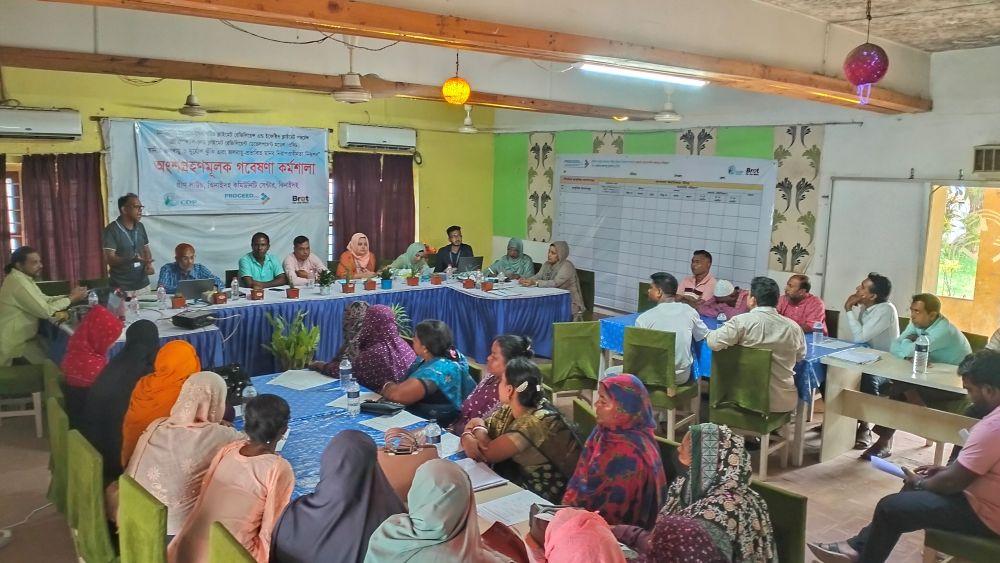
The Coastal Development
Partnership (CDP) successfully conducted a Participatory Climate and
Disaster Risk Assessment (PCDRA) Workshop in Jhenaidah, one of the
five selected program areas under the climate‑resilience initiative. The
workshop brought together community members, local leaders, women, youth,
farmers, and disaster‑affected families to assess climate vulnerabilities and
co‑develop solutions tailored to the Jhenaidah context.
A Community‑Led Climate
Assessment for Jhenaidah
Using globally recognized tools
such as the CLIMA Toolkit and Climate‑Induced Human Insecurity (CIHI)
methods, the workshop facilitated an in‑depth understanding of how climate
change is affecting local communities. The event was supported by international
partners including Bread for All, HEKS, Brot für die Welt, and FAKT,
with facilitation from SPACE and active engagement of local government bodies
in Jhenaidah.
Understanding Local Risk and
Exposure
The assessment in the Jhenaidah
working area revealed the community’s exposure to multiple climate hazards,
such as:
These hazards significantly
affect crop production, drinking water availability, livestock, housing
structures, income stability, and overall community well‑being.
Livelihoods and Vulnerability
Profile
Similar to the findings across
the five program areas, Jhenaidah showed:
Participation and Inclusive
Decision‑Making
Participants included a diverse
group representing farmers, women, youth leaders, persons with disabilities,
local school authorities, and members of Union Parishad committees. Through
participatory mapping, hazard ranking, and vulnerability scoring, the community
identified the most climate‑affected households and villages within the
Jhenaidah working area.
Key Priorities Identified for
Jhenaidah
Participants collectively
prioritized an action plan focused on:
Workshop Outcomes
The Jhenaidah PCDRA workshop
resulted in:
Looking Ahead
The findings from the Jhenaidah
workshop will be integrated into local development planning and used to
mobilize resources for climate adaptation. CDP and local stakeholders
reaffirmed their commitment to long‑term climate resilience, continuous
monitoring, and ensuring that marginalized groups remain at the center of
decision‑making.